

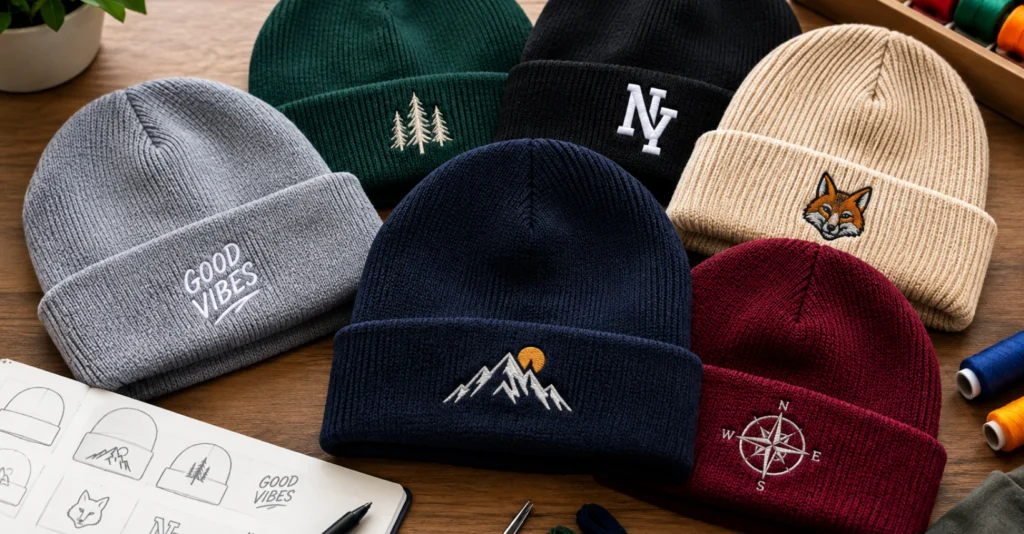
Custom beanies are more than winter accessories. They are a practical way to express personal style, promote a business, build brand recognition, and create matching headwear for teams, clubs, and events. With the right embroidery, an ordinary knitted beanie can become a distinctive accessory that people enjoy wearing throughout the colder months.
At Custom Caps Factory, we understand that choosing the right design is an important part of creating personalised headwear. From small embroidered logos and minimalist lettering to colourful artwork and bold 3D-inspired designs, there are many ways to customise a beanie to suit your needs.
However, not every design works equally well on knitted fabric. The texture, stretch, thickness, and construction of a beanie can affect how embroidery looks and feels. Selecting the right artwork, thread colours, placement, and stitch details helps create a cleaner and more professional result.
In this complete guide, we explore the best embroidery ideas for custom beanies, explain how to choose a design, and share practical tips for businesses, clothing brands, sports teams, and individuals. Whether you are ordering personalised beanies for the first time or developing a branded winter collection, you will find inspiration to help you create headwear that stands out.
1. Why Choose Embroidery for Custom Beanies?
Embroidery is a popular option for custom beanies because it adds texture, detail, and a premium appearance. Instead of simply placing a flat graphic on the surface, embroidery uses coloured thread to create a design that becomes part of the finished look.
A professional finish
An embroidered logo can make a beanie look more refined and suitable for professional use. This is particularly useful for businesses, workwear suppliers, hospitality teams, and clothing brands that want consistent branding across their products.
A carefully stitched logo on the folded cuff can create a smart, understated appearance without overwhelming the rest of the design.
A distinctive texture
Embroidery introduces a raised, tactile quality that distinguishes it from many printed designs. Even a simple symbol or wordmark can become more noticeable when stitched with contrasting thread.
This textured finish works particularly well with bold lettering, geometric symbols, initials, and simplified illustrations.
Versatile design possibilities
Custom beanies can accommodate a wide variety of embroidery styles. Depending on the fabric and design, you can choose small logos, text, decorative patterns, initials, mascots, or colourful graphics.
The best approach is to match the complexity of the artwork to the available embroidery area and the knit structure of the beanie.
Suitable for different audiences
Embroidered beanies work for many different purposes, including:
- Corporate merchandise and employee gifts.
- Sports teams, gyms, and outdoor clubs.
- Streetwear and fashion collections.
- School groups and university societies.
- Construction, trade, and outdoor workwear.
- Promotional merchandise and event giveaways.
- Personalised gifts for friends and family.
Their versatility makes embroidered beanies a useful option for both individual orders and larger branded collections.
2. Minimalist Logo Embroidery
Minimalist embroidery is an excellent starting point for anyone who wants a clean, versatile beanie design. Rather than filling the available space with detailed artwork, this approach focuses on a small logo, simple symbol, or restrained combination of text and graphics.
Small brand logos
A compact logo embroidered on the front cuff creates a balanced appearance. It allows the brand to remain recognisable without turning the beanie into an oversized advertisement.
For businesses, a simplified version of the main logo may work better than a detailed corporate emblem. Removing tiny text, complicated outlines, and unnecessary decorative elements can improve clarity.
Geometric symbols
Circles, triangles, abstract shapes, and simple line-based symbols can look particularly effective on minimalist headwear. These designs are suitable for modern clothing labels, creative studios, fitness brands, and lifestyle businesses.
Single-colour embroidery
Using one thread colour creates a consistent, understated look. White thread on black fabric, black thread on grey fabric, or cream thread on a dark green beanie can provide a strong visual contrast.
Alternatively, a closely matched thread colour creates a subtle, tonal finish.
Design tip: Keep the artwork simple enough to remain recognisable at a small size. Before approving production, review the embroidered design at its intended dimensions rather than relying only on a large digital preview.
3. Custom Beanies with Embroidered Text
Text-based embroidery is another versatile way to personalise winter headwear. It can communicate a brand name, team identity, slogan, initials, or short message without requiring a complicated graphic.
Brand names and wordmarks
A company name embroidered across the cuff can make a beanie immediately identifiable. This works well for independent clothing labels, cafés, outdoor businesses, creative agencies, and local organisations.
Choose a typeface that reflects the brand’s personality. Bold lettering creates a more prominent appearance, while a clean sans-serif font can feel modern and understated.
Short slogans
Short phrases can give a custom beanie a more personal identity. Outdoor clubs might use a phrase associated with their activities, while clothing brands could choose a memorable expression that reflects their style.
The main consideration is readability. Long slogans often require small lettering, which can be difficult to reproduce cleanly on knitted fabric.
Initials and monograms
Initials offer a straightforward option for personalised gifts, team accessories, and premium merchandise. They can be embroidered in a classic serif font, a modern block style, or a custom monogram design.
For an elegant appearance, use a restrained colour palette and leave enough space around the letters.
Numbers and team names
Sports teams and clubs can use embroidered numbers, abbreviations, or short team names to create coordinated accessories. This is especially useful for training groups, supporters, and outdoor organisations.
Before finalising the text, check the spelling, letter spacing, and contrast between the thread and beanie fabric.
4. Bold 3D Puff-Inspired Beanie Designs
Raised embroidery can add visual depth to custom headwear, making selected letters or symbols appear more prominent. Three-dimensional puff embroidery typically uses foam beneath the stitching to produce a raised effect.
However, traditional 3D puff embroidery is not automatically suitable for every knitted beanie. The fabric’s texture, stretch, thickness, and stability can influence the outcome.
When raised lettering works
Bold, relatively simple lettering is generally more suitable for raised embroidery than delicate scripts or intricate illustrations. Thick strokes provide more room for the stitching to cover the foam.
A short brand name or a large initial can create a strong focal point when the beanie construction supports the technique.
Choosing the right placement
The folded cuff is often the most practical location for a prominent design because it can provide a more stable embroidery surface. However, the suitability of this area depends on the beanie’s knit and construction.
A professional supplier can help determine whether standard embroidery, raised embroidery, or a separate embroidered patch would provide the best finish.
Keeping the design balanced
Raised details are visually strong, so they do not always need to cover the entire cuff. A single bold word, monogram, or compact symbol can create enough impact.
Design tip: Ask for confirmation that the selected fabric and embroidery method are compatible before choosing a raised design for your order.
5. Nature-Inspired Embroidery Ideas
Nature-themed embroidery is an appealing option for outdoor brands, hiking clubs, travel businesses, and people who prefer earthy designs.
These designs can range from small, simple symbols to more detailed illustrations, depending on the available space and the fabric.
Mountains and outdoor landscapes
A simplified mountain outline is a classic choice for adventure-themed headwear. It can represent hiking, climbing, camping, travel, or a general appreciation for the outdoors.
For a compact design, focus on the mountain silhouette rather than attempting to reproduce every rock, tree, or landscape detail.
Trees and forest symbols
Pine trees, forest silhouettes, and small woodland illustrations work well for camping brands, nature groups, and outdoor clothing collections.
A single tree can create a minimalist appearance, while a small group of trees can provide more visual interest.
Waves and coastal designs
Wave symbols, simple suns, and coastal motifs are suitable for surf brands, sailing clubs, beach communities, and travel merchandise.
Navy, white, and muted blue thread colours can create a coastal feel, while warmer colours may suit a more contemporary fashion collection.
Floral and botanical designs
Leaves, flowers, and small botanical motifs offer a softer alternative to conventional logos. These can work well for lifestyle brands, personalised gifts, and fashion accessories.
The key is to simplify fine details so that small petals, stems, and outlines remain distinguishable after stitching.
Wildlife-inspired designs
Bears, foxes, wolves, birds, and other animals can give a beanie a recognisable personality. For smaller embroidery areas, use a clear silhouette or a simplified animal face instead of a highly detailed illustration.
Nature-inspired designs are particularly effective when the thread colours complement the overall beanie colour.
6. Streetwear-Inspired Embroidered Beanies
Streetwear is a strong source of inspiration for custom beanie designs. It offers room for bold typography, unusual symbols, contrasting colours, and distinctive branding.
Oversized lettering
A large word or abbreviation can become the central feature of a streetwear beanie. Block lettering, condensed fonts, and custom letterforms can create a recognisable identity.
Before selecting oversized text, consider the available cuff height and width. The design should fit naturally without stretching around the beanie.
Gothic and alternative typography
Gothic lettering, angular symbols, and alternative type styles can suit fashion labels that want a darker or more expressive appearance.
These fonts may contain narrow spaces and intricate shapes, so simplifying the artwork can help preserve readability during embroidery.
Abstract symbols
Abstract graphics are useful when a brand wants an identity that is not dependent on its full name. A custom emblem or distinctive symbol can become a recurring element across beanies, caps, hoodies, and other apparel.
Monochrome designs
Black, white, grey, and other neutral shades are useful for creating coordinated streetwear collections. A contrasting embroidered logo can stand out clearly, while tonal stitching creates a more subtle finish.
For a cohesive collection, use consistent artwork and thread colours across different garment styles.
7. Colourful Embroidery for Custom Beanies
Colour can transform a simple beanie into a distinctive accessory. The right thread combination can highlight a logo, reinforce brand identity, or make a design more playful.
High-contrast combinations
Contrasting thread colours improve visibility and can make small logos easier to recognise. Examples include:
- White embroidery on black beanies.
- Black embroidery on cream beanies.
- Yellow embroidery on navy beanies.
- Cream embroidery on forest green beanies.
- Red embroidery on charcoal beanies.
These are starting points rather than fixed rules. The best combination depends on the artwork, fabric shade, and desired appearance.
Brand-colour embroidery
Businesses can use their established brand colours to create consistency across promotional products and uniforms.
If the original logo contains several colours, consider whether every shade needs to be reproduced. Reducing the palette may produce a cleaner result and can simplify the embroidery process.
Gradient-inspired designs
Embroidery does not reproduce digital gradients in exactly the same way as a screen image. However, carefully selected thread colours can create the impression of a colour transition through separate sections or stitch patterns.
This approach works best when the design remains readable without relying on a perfectly smooth gradient.
Seasonal colour palettes
For winter collections, colours such as burgundy, forest green, navy, cream, charcoal, and rust can complement the season.
Brighter colours may be more appropriate for sports teams, youth merchandise, festival products, and attention-grabbing promotional headwear.
Design tip: Request a thread-colour reference or production sample when precise brand-colour matching is important. Screen colours may not accurately represent the finished thread.
8. Embroidered Beanies for Businesses and Corporate Branding
Custom embroidered beanies can help businesses create a consistent appearance across employees, customers, and promotional campaigns.
Unlike a disposable promotional item, a useful winter accessory can remain in circulation for an extended period when it is well made and regularly worn.
Employee uniforms
Businesses operating outdoors or in cooler environments may use branded beanies as part of their staff clothing. Construction companies, delivery teams, maintenance services, and outdoor workers are potential users.
For professional workwear, a compact logo and restrained colour scheme usually provide a practical starting point.
Client gifts
Branded winter gifts can help businesses maintain relationships with clients, partners, and suppliers. A well-designed beanie can feel more useful and personal than a generic promotional product.
Consider the recipient’s likely preferences when selecting the fabric colour and embroidery style.
Events and conferences
Custom beanies can be produced for winter exhibitions, networking events, charity campaigns, company celebrations, and outdoor promotions.
The design should be simple enough to remain recognisable from a distance while still looking attractive when worn.
Retail merchandise
Brands can use embroidered beanies as standalone products or as part of a wider clothing collection. Coordinating colours, typography, and logo placement across multiple products creates a more consistent brand identity.
When ordering in bulk, finalise the artwork, colour choices, and sample approval process before authorising the full production run.
9. Personalised Beanies for Sports Teams and Clubs
Sports teams and recreational clubs can use custom beanies to build a sense of belonging. Matching headwear is particularly useful during cold-weather training, outdoor competitions, travel, and team gatherings.
Club logos
An embroidered club logo provides an easy way to identify team members and supporters. If the original logo is complex, a simplified version may be more suitable for the smaller embroidery area.
Team initials
Initials are a practical option when a club name is too long to fit comfortably on the cuff. They can also be combined with a small emblem or year of establishment.
Mascots and symbols
A team mascot can give a beanie a more distinctive appearance. Simplified mascots generally work better than illustrations containing numerous tiny details.
Supporter merchandise
Custom beanies can also be sold to supporters as part of a team’s merchandise range. Choose colours associated with the club and keep the design consistent with existing merchandise.
For larger orders, consider whether adult and youth sizes, different beanie styles, or alternative cuff designs are required.
10. Personalised Beanies for Gifts and Special Occasions
An embroidered beanie can become a thoughtful gift when the design reflects the recipient’s interests or personality.
Initials and names
Personalised initials are suitable for birthdays, winter gifts, and small group presents. A name may also work if the lettering can be kept clear and appropriately sized.
Friendship and family designs
Matching beanies can be created for families, friendship groups, or couples. The designs might share the same symbol while using different colours or initials.
Travel and adventure gifts
For someone who enjoys hiking, camping, skiing, or exploring new places, a beanie with a mountain, compass, or other relevant symbol can make a practical personalised gift.
Graduation and club gifts
Graduating students, society members, and club participants may appreciate a beanie featuring a short abbreviation, establishment year, or emblem.
To create a more polished result, avoid overcrowding the cuff with several unrelated elements. A single meaningful design is often more effective.
11. Logo Placement Ideas for Custom Embroidered Beanies
Choosing the right embroidery placement is just as important as selecting the design itself. Placement affects visibility, balance, and how the beanie looks when worn.
Front cuff placement
The front cuff is one of the most common choices for embroidered beanies. It provides a clear location for a logo, initials, short wordmark, or compact illustration.
This position works well for business branding and retail headwear because the design is generally easy to see from the front.
Side placement
A small embroidered symbol on the side of a beanie can create a more understated appearance. It may suit fashion brands that prefer subtle branding or products with a larger front graphic.
The available space and visibility depend on the beanie’s construction and how it sits on the head.
Rear placement
The rear area may accommodate a small logo, short phrase, or secondary branding element. It can be useful when the front design is already prominent.
Avoid placing important text where the fold, seam, or natural shape of the beanie could distort its appearance.
Unfolded design placement
Some beanies can accommodate embroidery above the cuff, depending on their structure and knit pattern. This can create a different visual effect from conventional cuff embroidery.
Because knitted fabric may stretch or shift during stitching, the supplier should assess the design and fabric before production.
Placement tip: Confirm the intended dimensions and position on a visual mockup. A design that looks balanced on a flat screen may appear different once the beanie is folded and worn.
12. Choosing the Best Beanie Style for Embroidery
The beanie itself influences the final result. Different knit structures and constructions provide different levels of support for embroidery.
Cuffed beanies
Cuffed beanies are a popular option because the folded section can provide a defined area for a logo. They suit many corporate, retail, team, and promotional designs.
Their appearance can range from fitted and understated to chunky and casual.
Ribbed knit beanies
Ribbed knit fabric has visible vertical texture and stretch. This gives it a distinctive appearance, but the ribbing can make embroidery more challenging.
A suitable stabilising method and appropriate design size can help reduce distortion. The exact approach depends on the fabric and production equipment.
Slouchy beanies
Slouchy beanies offer a relaxed shape and can suit casual clothing labels and lifestyle merchandise. Their loose fit may influence where an embroidered design looks most balanced.
Small logos and uncomplicated symbols can be a useful starting point.
Fine-knit beanies
Fine-knit fabrics may provide a more compact surface, although the result still depends on the specific material and construction. These beanies can suit minimalist logos and clean text designs.
The supplier should confirm whether the selected fabric can support the intended stitch density.
Chunky knit beanies
Chunky knits have a pronounced texture that can make intricate embroidery difficult. A separate embroidered patch may be a better option when the surface is too uneven for clean stitching.
Always evaluate the actual beanie material rather than assuming that one embroidery method will work for every style.
13. Embroidery vs Embroidered Patches for Beanies
Direct embroidery is not the only way to add a stitched design to a beanie. An embroidered patch can provide an alternative when the knit structure, artwork, or desired appearance makes direct stitching less suitable.
Direct embroidery
With direct embroidery, the design is stitched onto the beanie itself.
Potential advantages include:
- A seamless, integrated appearance.
- No separate patch border unless included in the artwork.
- A suitable option for many cuffed beanies.
- A clean finish for appropriately simplified logos.
The main consideration is that the knit fabric must support the stitching without excessive distortion.
Embroidered patches
An embroidered patch is created separately and then attached to the beanie. Depending on the patch and beanie construction, attachment may involve sewing or another suitable method.
Potential advantages include:
- A defined border around the artwork.
- Greater flexibility for certain detailed designs.
- A distinctive badge-style appearance.
- The ability to use the same patch design across different products.
Patches also have limitations. Their edges, thickness, attachment method, and flexibility need to suit the beanie.
Which option should you choose?
Choose direct embroidery when you want the design to feel integrated with the headwear and the fabric can support it. Consider an embroidered patch when you prefer a badge-style finish or need a more controlled surface for the artwork.
At Custom Caps Factory, the best choice for your project should be based on the beanie style, design complexity, intended use, and desired finish.
14. How to Prepare Artwork for Beanie Embroidery
Preparing the artwork properly can make a significant difference to the final product. A design that looks excellent on a computer may need adjustments before it can be stitched onto knitted fabric.
Use clear, high-quality artwork
Provide a clean logo or illustration whenever possible. Vector formats are useful because they can be resized without losing their underlying shape information. High-resolution raster images can also be helpful.
However, a high-resolution image is not automatically embroidery-ready. The artwork usually needs to be converted into stitch instructions through a process called digitising.
Simplify small details
Tiny lettering, narrow gaps, fine outlines, and complicated gradients can be difficult to reproduce with thread.
Remove unnecessary details and increase the size of important elements where possible. The goal is to preserve the design’s identity while making it suitable for stitching.
Select appropriate lettering
Fonts with clear letter shapes and adequate stroke thickness are generally easier to reproduce than very thin or highly decorative fonts.
If your brand uses a custom typeface, ask whether any adjustments are needed for the intended embroidery size.
Check colour contrast
Choose thread colours that remain visible against the beanie fabric. Similar shades can create a subtle effect, but they may reduce legibility.
For logos that must remain easy to recognise, test the contrast before approving production.
Approve a mockup
A digital mockup helps you review the artwork’s size, placement, and overall appearance. It should show the design on the intended beanie style wherever possible.
Remember that a mockup is a visual guide, not a perfect representation of thread texture or final stitch density. Ask questions about any detail that is important to the finished product.
15. Common Design Mistakes to Avoid
A good beanie design depends on more than creativity. Avoiding common production issues can help you achieve a more consistent result.
Using overly complicated artwork
Excessive detail can make a small design difficult to read. Simplify intricate illustrations and focus on the features that make the logo recognisable.
Choosing lettering that is too small
Tiny text may lose clarity when stitched. Increase the lettering size, shorten the wording, or use an abbreviation when necessary.
Ignoring fabric texture
A smooth digital preview does not show how embroidery will interact with a ribbed or chunky knit. Choose a design and method that suit the actual material.
Selecting too many thread colours
A large palette can make a compact logo feel crowded. Reducing the number of colours often improves visual clarity and creates a more consistent finish.
Overlooking placement
A design positioned too close to a seam, edge, or fold may look unbalanced. Review the dimensions and placement before approving production.
Skipping sample approval
For a large order or a design with strict branding requirements, a sample or appropriate production proof can help identify problems before the full quantity is made.
Forgetting the intended wearer
A corporate team, streetwear customer, sports club, and outdoor enthusiast may all prefer different styles. Start with the audience and purpose instead of choosing a design based only on current trends.
16. How to Care for Embroidered Beanies
Proper care helps maintain the appearance of both the knit fabric and the embroidery.
Follow the garment’s care instructions
Different beanies may use acrylic, wool, cotton, polyester, or blended fibres. Each material can have different washing and drying requirements.
Always follow the manufacturer’s instructions for the specific product.
Avoid unnecessary heat
High temperatures can affect some fibres, cause shrinkage, or alter the shape of a beanie. Air drying is often a sensible choice when permitted by the care label.
Protect the embroidered area
Avoid pulling loose threads or catching the embroidery on sharp objects. If the beanie has a patch, check its attachment periodically, particularly after frequent wear.
Store the beanie properly
Keep the beanie in a clean, dry place. Avoid storing it while damp, and do not compress it unnecessarily if maintaining its shape is important.
These simple steps can help keep custom headwear looking presentable throughout the season.
17. How to Order Custom Embroidered Beanies
Ordering personalised beanies is easier when you have a clear idea of the finished product before production begins.
At Custom Caps Factory, you can use the following steps to prepare your project.
Step 1: Decide on the purpose
Determine whether the beanies are for business uniforms, retail sales, an event, a sports team, or personal gifts. The intended use will help guide your style and design choices.
Step 2: Select the beanie style
Consider cuffed, ribbed, slouchy, fine-knit, or chunky-knit options. Think about the fit, fabric, colour, and season in which the beanies will be worn.
Step 3: Prepare your logo or artwork
Provide your existing logo, text, initials, or design concept. If the artwork contains intricate details, ask whether it needs simplifying for embroidery.
Step 4: Choose the embroidery details
Confirm the thread colours, design dimensions, and placement. Decide whether direct embroidery or an embroidered patch is more suitable.
Step 5: Confirm quantities and requirements
Share the required quantity, preferred delivery timeframe, and any special requirements. For larger orders, make sure the artwork and product specifications are approved before production.
Step 6: Review the proof
Check spelling, logo proportions, colours, and positioning. Request adjustments before giving final approval.
Step 7: Confirm production
Once the details are agreed, confirm the order with your supplier and clarify the expected production and delivery schedule.
Planning these details in advance can help reduce avoidable changes and make the ordering process more straightforward.
18. Why Choose Custom Caps Factory for Custom Beanies?
Choosing the right supplier is an important part of creating embroidered headwear that reflects your brand.
At Custom Caps Factory, your design should be approached with attention to the product, artwork, and intended use. Whether you need branded beanies for a business, matching headwear for a team, or personalised products for a clothing collection, the aim is to help you develop a design that works in practice as well as on screen.
When discussing your requirements, consider sharing:
- Your logo or design artwork.
- The type and colour of beanie you prefer.
- Your preferred embroidery position.
- Approximate design dimensions.
- The quantity you need.
- Your intended delivery timeframe.
These details help establish the scope of the project and make it easier to discuss suitable options.
A strong custom beanie design balances appearance, comfort, brand identity, and production practicality. By selecting the right artwork and embroidery approach, you can create headwear that suits your audience and supports your wider branding goals.
Conclusion
The best embroidery ideas for custom beanies combine creativity with practical design choices. Minimalist logos, embroidered text, nature-inspired symbols, streetwear graphics, colourful artwork, and personalised initials can all create distinctive results when adapted to the right beanie style.
The key is to consider how the design will translate from a digital image to stitched thread. Fabric texture, lettering size, colour contrast, placement, and stitch complexity all influence the finished appearance.
For businesses, custom embroidered beanies can help strengthen brand recognition and create coordinated winter merchandise. For teams and individuals, they offer a practical way to express identity through personalised headwear.
If you are planning your own design, start with a clear concept, choose a suitable beanie, and simplify the artwork where necessary. Then review the placement and production details before approving your order.
Ready to create your own custom embroidered beanies? Visit Custom Caps Factory to explore your custom headwear options and discuss a design that reflects your brand, team, or personal style.
Frequently Asked Questions
1. What are the best embroidery ideas for custom beanies?
Popular ideas include minimalist logos, brand names, initials, short slogans, geometric symbols, mountain designs, animal motifs, and sports team emblems. The best choice depends on the intended audience, beanie style, and available embroidery space.
2. Can you embroider a logo on a knitted beanie?
Yes, many knitted beanies can be embroidered, particularly those with a suitable cuff or stable embroidery area. However, the knit structure, stretch, thickness, and logo complexity affect the result. A supplier should assess the fabric before production.
3. Is embroidery better than printing for custom beanies?
Embroidery provides a textured, stitched appearance that can suit logos and premium headwear. Printing may be more appropriate for certain complex or highly detailed graphics. The best method depends on the fabric, artwork, intended appearance, and budget.
4. Where should an embroidered logo go on a beanie?
The front cuff is a common choice because it offers a defined area for branding. Side, rear, and other positions may also work depending on the construction and fit of the beanie.
5. Can small text be embroidered on a beanie?
Small text may be possible, but very fine lettering can lose clarity when stitched onto knitted fabric. Clear fonts, adequate letter size, and simplified wording usually provide better results.
6. Which beanie colours work best with embroidery?
Black, navy, grey, cream, and forest green are versatile choices. White, cream, yellow, or contrasting brand colours can make embroidery more visible. The best combination depends on the design and desired finish.
7. Can I order custom embroidered beanies for my business?
Custom embroidered beanies can be used for staff uniforms, client gifts, promotional campaigns, events, and retail merchandise. Before ordering, confirm the design, beanie style, quantity, and production requirements with your supplier.
8. What artwork do I need for custom beanie embroidery?
A clean logo or high-quality image is a useful starting point. Vector artwork can be especially helpful, but the design will generally need digitising into stitch instructions. Fine details may require simplification.
9. Can detailed designs be embroidered on beanies?
Some detailed designs can be adapted for embroidery, but very small elements, thin lines, and complicated gradients may not reproduce clearly. A simplified design or embroidered patch may be a better solution for certain artwork.
10. How do I make my embroidered beanie last longer?
Follow the manufacturer’s care instructions, avoid unsuitable heat, protect the embroidered area from snagging, and store the beanie clean and dry. Care requirements depend on the fabric and construction.