
A cap can be much more than an everyday accessory. When the right shape, colour, material and logo come together, it becomes a powerful way to express personality and build brand recognition. From contemporary streetwear labels to sports-inspired collections and business merchandise, premium caps offer a practical product that people can wear repeatedly while representing a brand.
Custom New Era Caps: Where Premium Style Meets Brand Identity explores how premium, structured cap styles can be used to create distinctive branded headwear. Whether you are developing a clothing line, planning promotional merchandise or creating caps for a club or organisation, the key is to choose a design that combines comfort, appearance and a clear visual identity.
At Custom Caps Factory UK, we understand that every brand has its own character. A minimalist fashion label may prefer subtle embroidery, while a streetwear brand might choose bold lettering, contrasting colours or dimensional detailing. The most effective design is one that suits the intended audience and feels consistent with the rest of the brand.
In this guide, we will explore popular cap styles, customisation techniques, logo placement, colour selection, design planning and the practical considerations that help create premium-looking branded headwear.
What Makes Premium Custom Caps Stand Out?
Premium headwear is not defined by a logo alone. Several details influence the overall appearance and usefulness of a cap, including its construction, fit, fabric, finishing and decoration.
A well-designed cap should feel cohesive. The logo should complement the shape rather than overwhelm it, and the colours should work together without making the design unnecessarily complicated.
1. Structured Construction
Structured caps generally feature reinforced front panels that help maintain their shape. This creates a defined profile that works particularly well with embroidered logos, lettering and prominent graphics.
For brands that want a clean, professional or sports-inspired appearance, structured headwear can provide an excellent starting point. Its firm front panel can also help maintain a consistent look across a collection.
However, structured caps are not the only option. Relaxed caps can be suitable for casual fashion, lifestyle brands and customers who prefer a softer silhouette.
2. Quality Decoration
The way a logo is applied can significantly affect the finished product. Embroidery creates texture, printing supports colourful artwork, and patches introduce another layer of visual interest.
The best technique depends on the design. A simple symbol may look excellent as embroidery, while a detailed illustration could require a different method.
3. Thoughtful Colour Selection
Colour influences how customers perceive a brand. Black and white can create a clean, versatile look, while navy, cream, forest green and other carefully selected shades can support a distinctive identity.
The cap colour should complement the logo and the wider product range. A consistent colour palette helps branded headwear look like a planned part of a collection rather than an unrelated promotional item.
4. Comfortable Fit
Even the most attractive cap may struggle to become a favourite if it is uncomfortable. Fit, crown height, closure type, material and internal finishing should all be considered during product selection.
When ordering for different customers, think about whether an adjustable, stretch-fit or fitted design is most appropriate. The right choice depends on your audience and the purpose of the order.
Understanding New Era Caps and Their Appeal
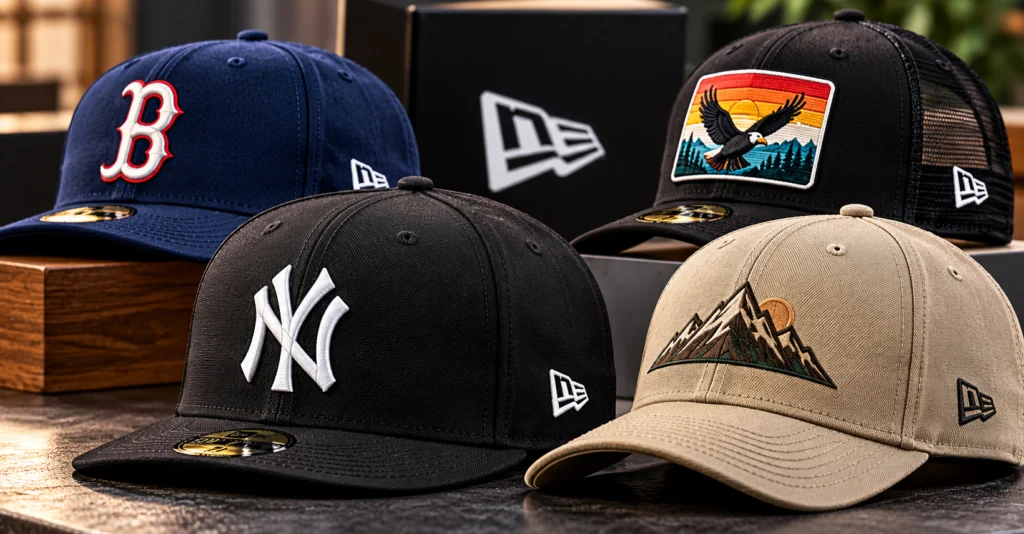
New Era is a recognised headwear brand associated with baseball caps and sports-inspired styles. Its products have become familiar in sporting, casual and streetwear settings, helping make structured caps an important reference point in contemporary headwear design.
When customers search for custom New Era caps, they may be looking for the recognisable premium cap aesthetic: a structured crown, a carefully finished visor, distinctive branding and a shape that works with everyday outfits.
For businesses developing their own headwear, understanding this aesthetic can help inform design decisions without copying another company’s protected branding.
It is important to distinguish between customising genuine New Era products through an authorised arrangement and creating custom caps in a similar general style. New Era’s name, logos and product marks are protected intellectual property. Only use genuine branded products and authorised logos where you have the appropriate rights or permission.
Custom Caps Factory UK can help customers explore custom headwear options around their own brand identity, artwork and specifications. The aim is to create a distinctive product that reflects your business rather than suggesting an unauthorised connection with another brand.
Why Custom Caps Are Valuable for Brand Identity
Brand identity includes more than a logo. It involves the colours, visual style, tone and design choices that make a business recognisable.
Custom caps provide a wearable way to bring these elements together. Because they can be used in different settings, they can support a brand’s visibility while remaining useful to the person wearing them.
Building a Consistent Visual Identity
A cap can reinforce your brand’s visual language through colour, typography, logo placement and decoration.
For example, a business with a minimalist identity may choose a small embroidered emblem on a black cap. A streetwear label might prefer a larger front design with contrasting thread. A sports club may use team colours and a badge that matches its existing kit.
Each approach can work when it is consistent with the brand’s personality.
Creating Wearable Merchandise
Branded merchandise works best when people genuinely want to use it. A practical cap with an appealing design can become part of someone’s regular wardrobe.
Rather than treating a cap simply as an advertising surface, consider it a product in its own right. Comfort, styling and durability can influence whether customers choose to wear it again.
Supporting Brand Recognition
Repeated exposure can help people become more familiar with a brand. When employees, team members or customers wear branded caps, the design can make the business more visible in appropriate everyday settings.
This does not guarantee sales or customer recognition, but it gives brands another way to present a consistent identity beyond their website and social media channels.
Strengthening Team Identity
Custom caps can also create a coordinated appearance for staff, sports teams, clubs and event organisers.
Matching headwear can help people identify team members and provide a shared visual element. For businesses, it can form part of a wider uniform or merchandise programme.
Popular Cap Styles for Premium Customisation
Before choosing a decoration method, decide which cap silhouette best suits your audience. The style affects both the appearance of the finished product and the areas available for branding.
Structured Baseball Caps
Structured baseball caps are versatile and suitable for many types of branding. Their defined front panels provide space for logos, initials and short text.
They can work for corporate merchandise, fashion collections, sports-inspired designs and everyday branded headwear.
Snapback Caps
Snapbacks commonly feature a flat or relatively flat visor and an adjustable snap closure. Their defined profile makes them popular for contemporary streetwear and casual merchandise.
A snapback can suit bold typography, large front logos and contrasting colour combinations. The finished design should still be balanced, with enough space around the logo to keep it readable.
Fitted Caps
Fitted caps are designed around specific head sizes rather than relying on a conventional adjustable rear strap. They can create a streamlined, coordinated look for sports-inspired collections and premium merchandise.
Because fitted sizing needs to be considered carefully, brands should confirm the required size range before placing an order.
Low-Profile Caps
Low-profile caps have a less prominent crown and can provide a more understated appearance. They may suit brands that prefer casual styling over a tall, structured silhouette.
Smaller logos and restrained colour combinations often complement this style, although the final decoration should be selected according to the cap’s construction.
Five-Panel Caps
Five-panel caps offer a different front profile from conventional six-panel designs. They are often associated with contemporary lifestyle, outdoor and streetwear collections.
Their panel construction can influence logo placement, so artwork should be checked against the actual cap design before production.
Choosing the Right Logo for Your Custom Caps
The logo is often the most noticeable feature of a branded cap. However, a larger design is not automatically better. The goal is to make the artwork clear, balanced and appropriate for the available space.
Minimalist Logos
A small symbol, monogram or wordmark can give a cap a refined appearance. Minimalist designs can be particularly effective for fashion labels, lifestyle brands and businesses that prefer subtle branding.
The simplicity of the design makes accurate spacing and clean finishing especially important.
Bold Front Logos
A prominent front logo can create a stronger visual statement. This approach may suit sports teams, streetwear labels and merchandise designed to attract attention.
Keep the design readable at the intended size. Excessive detail or too many overlapping elements can make a logo difficult to interpret when reproduced on a curved surface.
Initials and Monograms
Initials can provide a compact branding solution for clothing brands, personal labels and clubs.
Flat embroidery may suit clean lettering, while dimensional embroidery can create a more prominent effect when the design and cap material are compatible. The letter shapes should be tested at the actual intended size before production.
Badge-Style Artwork
Circular, shield-shaped and other badge designs can bring several elements together within a defined area. They may work well for clubs, outdoor brands, sports-inspired products and limited-edition collections.
Depending on the artwork, a badge can be embroidered directly or produced as a separate patch.
Front and Side Branding
Some designs use a main logo on the front and a smaller detail on the side or rear. This can add interest without making the cap feel overcrowded.
For a balanced result, establish a clear visual hierarchy. The primary logo should remain the focal point, while secondary details should support it.
Customisation Techniques for Premium-Looking Caps
The decoration method affects the texture, colour, detail and overall character of your cap. Choosing the right technique starts with understanding the artwork and the intended result.
Flat Embroidery
Flat embroidery uses stitches to reproduce a design on the fabric surface. It can be suitable for logos, names, symbols and lettering with well-defined shapes.
Its advantages include a textured finish and a classic branded appearance. It is often a good option for businesses that want their logo to look integrated into the cap.
Very fine details and tiny lettering may need to be simplified, depending on the design size and fabric.
3D Puff Embroidery
Three-dimensional puff embroidery uses a foam layer beneath the stitching to create raised elements.
It is often associated with bold lettering and prominent symbols on structured caps. The raised effect can make a simple design more noticeable.
Not every logo is suitable for puff embroidery. Fine lines, intricate shapes and small text may be difficult to reproduce cleanly, so artwork preparation is important.
Custom Embroidered Patches
An embroidered patch provides a separate area for stitched artwork. It can be useful when the design has a badge-like shape or when a particular border forms part of the visual identity.
Patches may also help create a consistent design element across different products, depending on the attachment method and product construction.
Woven Patches
Woven patches use finer threads to reproduce certain details that may be difficult to achieve with thicker embroidery. They can be worth considering for smaller lettering and intricate designs.
The final result depends on the artwork, patch dimensions and production specifications.
Printed Designs
Printing can support colourful graphics, gradients and more detailed illustrations, depending on the process and material.
It may be a suitable choice when a design relies on multiple colours or visual details that would be difficult to translate into stitching.
Before selecting a printing method, confirm that it is compatible with the chosen cap and that the expected finish meets your requirements.
Combining Decoration Methods
Some designs combine embroidery with patches, labels or other decorative details. This can create a more layered appearance, but additional elements should serve a clear purpose.
A useful starting point is to select one primary decoration method and introduce secondary details only when they improve the design.
How to Choose Colours That Represent Your Brand
Colour selection should begin with your existing brand identity. If your business already has established colours, use them as a starting point for the cap design.
Black and White
Black and white are versatile options that can support minimalist, corporate and streetwear designs. White embroidery on a black cap, for example, creates a clear contrast.
The combination is easy to coordinate with many outfits, although it may not communicate the same personality as a more distinctive palette.
Navy and Cream
Navy and cream can create a classic, understated appearance. These colours may suit lifestyle brands, traditional businesses and fashion collections looking for a softer alternative to high-contrast black and white.
Earthy Colours
Olive, brown, beige and forest green can complement outdoor-inspired, heritage and casual collections.
The key is to make sure the colours work with the logo and the intended audience rather than selecting them only because they are popular.
Bold Colour Combinations
Bright colours can help a design stand out, especially for sports teams, event merchandise and youth-oriented brands.
However, using too many competing shades can weaken the visual hierarchy. Choose a primary colour, a supporting colour and an accent where appropriate.
Check Thread and Fabric Together
A colour that looks ideal on a screen may appear different when reproduced in thread or on fabric. Request a suitable design proof and confirm the selected shades before approving production.
Selecting Materials and Construction
Material choice affects appearance, comfort and suitability for different environments. It should be considered alongside the cap’s shape and decoration.
Cotton
Cotton caps are often chosen for their familiar feel and everyday versatility. Depending on the construction, they may suit casual merchandise, fashion collections and general business use.
Polyester
Polyester is used in many types of headwear and can be appropriate for sportswear and other performance-oriented applications. Its suitability depends on the fabric construction and intended use.
Cotton-Polyester Blends
Blended fabrics can combine characteristics of different fibres. The precise performance will depend on the blend ratio, fabric weight and manufacturing process.
Wool Blends and Other Fabrics
Some cap styles use wool blends or alternative materials to achieve a particular appearance or structure. These may be suitable for selected premium or heritage-inspired collections.
Do not choose a material solely on the basis of its name. Consider comfort, climate, maintenance, durability and compatibility with the intended decoration.
Custom Caps for Different Types of Brands
A strong cap design should respond to the needs of the people who will wear it. The same decoration and silhouette will not suit every business.
Fashion and Streetwear Brands
Fashion labels often need products that fit their existing collections. A structured cap with a distinctive logo can complement hoodies, T-shirts, jackets and other branded clothing.
Consider how the cap will look alongside the rest of your range. Matching colours and carefully selected details can help the products feel like part of one collection.
Sports Teams and Clubs
Teams may need caps for members, supporters, events or travel. Their designs commonly include a club emblem, initials or team colours.
Confirm that the artwork is suitable for the available front panel and that any additional branding remains legible at the chosen size.
Corporate Businesses
Businesses can use custom caps for staff uniforms, promotional campaigns and company events.
A clean logo, coordinated colours and comfortable construction can support a professional appearance. If the caps are intended for regular staff use, practicality should take priority over unnecessary decorative features.
Events and Promotions
Custom caps can form part of an event merchandise range or a promotional campaign. The design might include an event name, date, symbol or sponsor branding, provided the necessary permissions are in place.
For event orders, plan the artwork approval and production schedule early enough to allow time for delivery and any required checks.
Creators and Personal Brands
Content creators, independent designers and personal brands may use caps to develop merchandise for their audiences.
A recognisable symbol or short wordmark can make the product feel more connected to the creator’s identity. Consider what the audience would genuinely want to wear rather than treating the cap as an advertisement alone.
How to Design Custom Caps Step by Step
A clear design process can reduce uncertainty and help you make better decisions before production begins.
Step 1: Define the Purpose
Start by identifying why you need the caps. Are they for retail, staff uniforms, a sports club, an event or promotional distribution?
The purpose will influence the cap style, quantity, decoration method and budget.
Step 2: Identify Your Audience
Consider the people who will wear the finished product. Their preferences can guide decisions about the cap profile, colours, fit and overall design.
A fashion audience may prioritise styling, while a workwear order may require greater emphasis on practicality and consistent branding.
Step 3: Prepare Your Artwork
Gather your logo files, lettering, preferred colours and any reference images that you have permission to use.
Vector artwork is often useful for clean scaling, while high-resolution raster artwork may also be suitable depending on the production method. The supplier can advise whether the file needs adjustments or digitising for embroidery.
Step 4: Choose the Cap Style
Compare structured, snapback, fitted, low-profile and other suitable options.
Consider the crown shape, visor, closure, material and available branding areas. The cap should support the design rather than force the artwork into an unsuitable space.
Step 5: Select the Decoration Method
Choose between flat embroidery, 3D puff embroidery, patches, printing or another compatible method.
The decision should reflect the artwork, desired appearance, cap construction and order requirements.
Step 6: Review the Design Proof
A digital mock-up can help you assess how the logo might look on the selected cap.
Check the logo dimensions, position, colours, spacing and balance. If you are planning multiple colours or styles, review each version rather than assuming the same layout will work everywhere.
A digital proof is useful for reviewing the concept, but it may not reproduce every detail of the final physical product exactly.
Step 7: Confirm the Order Specifications
Before production, confirm the selected cap style, colours, decoration, quantity, size requirements, delivery expectations and approved artwork.
Written confirmation helps everyone work towards the same result.
Step 8: Check the Finished Caps
When the order is completed, check that the products match the agreed specifications. Look at logo placement, stitching, colour consistency, finishing and any obvious defects.
For larger orders, agree on quality expectations before production so that any issues can be handled through the appropriate process.
How to Maintain a Premium Appearance
A premium-looking cap should remain presentable after repeated use. Good care helps protect the material and decoration.
Follow the Care Instructions
Cleaning recommendations vary according to the cap material, construction and decoration. Check the supplier’s instructions before washing or treating the product.
Avoid Unnecessary Heat
High heat can damage certain fabrics, adhesives, patches and embroidery. Avoid ironing directly over decorated areas unless the care instructions specifically allow it.
Store Caps Carefully
Store caps in a way that helps preserve their shape. Avoid placing heavy objects on structured crowns or crushing the visor for extended periods.
Clean Marks Promptly
For many caps, gentle spot cleaning is preferable to aggressive washing. Test any cleaning method carefully and follow the instructions appropriate to the fabric.
Consider Everyday Use
If the caps will be worn frequently, choose materials and decoration that are suitable for the expected conditions. Outdoor use, sports activities and daily work may create different maintenance requirements.
Common Mistakes to Avoid When Ordering Custom Caps
Using an Overly Complicated Logo
A detailed logo may look impressive on a large screen but lose clarity when reduced to fit a cap. Simplifying fine lines and small text can help improve readability.
Choosing Colours Without Checking Contrast
A logo that blends into the cap fabric can be difficult to see. Check the contrast between the background and decoration before confirming the design.
Ignoring the Cap Profile
A logo designed for a large structured front may not translate directly to a smaller or softer cap. Always consider the actual product dimensions and construction.
Focusing Only on Price
Price matters, but it should not be the only factor. The decoration method, material, finishing, consistency and suitability for the intended use also influence the overall value.
Ordering Without Confirming Specifications
Unclear artwork, unconfirmed colours and incomplete quantity details can cause avoidable delays. Establish the requirements and approve the final design before production begins.
Copying Another Brand’s Protected Identity
Using another company’s name, logo or protected design without permission can create legal and commercial problems. Inspiration from general cap silhouettes is different from reproducing a protected brand identity.
For a distinctive product, build the design around your own logo, artwork and visual language.
Why Choose Custom Caps Factory UK?
At Custom Caps Factory UK, our focus is on helping brands turn their ideas into personalised headwear. The right cap is not simply a blank product with a logo added; it is a combination of style, construction, decoration and brand identity.
Our website offers a range of custom headwear options, including baseball caps, snapbacks, trucker caps, five-panel caps, six-panel caps and fitted caps. Available choices depend on the specific product and project requirements.
Customisation Around Your Brand
Your cap design can be planned around your logo, preferred colours, artwork and intended use. Whether your approach is minimal or bold, the aim is to create a cohesive result that represents your brand.
Options for Different Projects
Different customers have different priorities. A fashion label may need a distinctive merchandise design, while a business might require coordinated caps for employees or promotional activities.
Discussing the intended use helps establish which cap style and decoration method may be appropriate.
Support With Artwork and Design Decisions
If you are uncertain about logo size, embroidery or colour selection, sharing your concept and requirements can help clarify the available options.
Before production, make sure you understand the final specifications and approve the design proof.
Suitable for Small and Larger Projects
Order requirements vary from one project to another. Share your desired quantity, preferred style and artwork to confirm the options available for your order.
Frequently Asked Questions About Custom New Era Caps
What are custom New Era caps?
The phrase is commonly used when discussing personalised caps associated with New Era-branded products or their general premium, sports-inspired aesthetic. If you want genuine New Era products customised, confirm that the supplier is authorised to provide the products and requested decoration. Custom caps in a similar general style should use your own branding and must not imply an unauthorised connection with New Era.
Can I add my own logo to a premium cap?
Yes, many cap styles can be personalised with suitable logos, lettering or artwork. The available methods depend on the cap construction, material, design and supplier’s capabilities.
Is embroidery suitable for custom caps?
Embroidery is a popular choice for cap branding because it adds texture and can provide a durable, professional-looking finish when properly produced. The artwork may need to be simplified or digitised to suit the intended size.
What is the difference between flat and 3D puff embroidery?
Flat embroidery follows the fabric surface, while 3D puff embroidery uses a foam layer to create raised elements. Flat embroidery can suit a wide range of logos, while puff embroidery is often best for bold shapes and lettering that can accommodate the raised finish.
Which cap style is best for streetwear?
Structured baseball caps and snapbacks are common choices for streetwear-inspired designs. However, the best option depends on your audience, preferred fit, logo and overall collection.
Can I use multiple colours in my cap design?
Multiple colours may be possible depending on the decoration method and cap style. Ensure that the colours work together and that the logo remains clear against the fabric.
Are custom caps suitable for corporate branding?
Yes. Custom caps can form part of staff uniforms, event merchandise, promotional campaigns and corporate gifts. A clear logo and coordinated colour palette can help maintain a consistent brand appearance.
How do I prepare my logo for cap embroidery?
Provide the highest-quality artwork available and confirm the intended logo size. The design may need to be digitised into a stitch file, and fine details or very small lettering may require adjustments.
Can I order custom caps in bulk?
Bulk orders can be discussed according to the selected cap style, decoration method, artwork and quantity. Contact the supplier with your requirements to confirm availability, pricing and lead time.
Conclusion
Custom caps offer brands a practical way to bring style and identity together. The right silhouette, thoughtful colour selection, suitable material and well-executed decoration can turn a simple accessory into a distinctive part of a merchandise collection.
When exploring custom New Era caps, it is important to understand whether you mean genuine New Era products or custom caps inspired by a broader premium, structured aesthetic. Respecting brand ownership while developing your own visual identity helps keep the project distinctive and commercially appropriate.
From embroidered logos and bold lettering to custom patches and coordinated colour schemes, there are many ways to create headwear that reflects your brand’s personality.
At Custom Caps Factory UK, the process starts with your idea. Choose a style that suits your audience, prepare your artwork, consider the available customisation methods and confirm the specifications before production.